Indecision is the silent time killer.
After years of photographing hotels and hospitality businesses, I’ve learned that one of the biggest factors determining the success of a photoshoot has very little to do with the camera.
It’s preparation.
These days, I won’t begin a hotel photography commission without a shot list. And wherever possible, I encourage clients to create a mood board too.
Why? Because a well-prepared photoshoot is more efficient, more creative, and ultimately produces better photographs.
In fact, I have a maxim: 80% of the work is done before the shoot.
Let me explain why.
What Is a Shot List, and What Is a Mood Board?
A shot list is a detailed plan of the photographs we want to create during a photoshoot.
It identifies what needs to be photographed, where the photograph will be taken, what preparation is required, who needs to be involved, and what we’re trying to communicate.
A mood board is a collection of inspirational images that helps establish the creative direction of the shoot.
It might contain photographs from other hotels, interiors magazines, Pinterest, or businesses whose visual style you admire.
While the shot list helps us organise the shoot, the mood board helps us communicate the look and feel we’re trying to achieve.
They’re different tools, but they work beautifully together.
1. Without a Plan, You’re Making Every Decision on the Day
Early in my hospitality photography career, I undertook some photoshoots without a clearly defined plan.
The biggest problem wasn’t the photography itself. It was the amount of time spent trying to work out what we were doing next.
Progress could be painfully slow.
We’d arrive at a location only to discover that furniture needed moving, an area needed cleaning, or props weren’t available.
Perhaps we needed a member of staff who was busy elsewhere.
Or we’d spend valuable shooting time discussing what a photograph should look like when those conversations could have happened weeks earlier.
Meanwhile, the clock was ticking.
Every decision made during the shoot is time that could otherwise be spent creating photographs.
A good shot list addresses these questions beforehand.
When I arrive at a well-prepared hotel shoot, everyone knows what we’re trying to achieve, what they need to do, and when they need to do it.
We can hit the ground running.
2. A Shot List Makes You Think About Your Marketing Goals
This is arguably the most important reason to create a shot list.
Before asking what do we need to photograph, I encourage clients to ask two questions:
- Who are we trying to attract with this photograph?
- How do we want them to feel?
For me, brand is fundamentally about the feeling you want to convey.
Are you selling romance, luxury, relaxation, adventure, exclusivity, or a cosy escape from everyday life?
Consider a photograph of a hotel bedroom.
We could simply photograph the room as it looks.
Or we could style it with fresh flowers, a bottle of wine, and a room service tray to communicate the experience of a romantic getaway.
These are two very different photographs, even though we’re photographing exactly the same space.
The second photograph has a clear marketing purpose.
A great hospitality photograph doesn’t just show people what you have. It helps them imagine how they’ll feel when they’re there.
That’s the thinking I want clients to do before we begin.
3. Creating a Shot List Should Be a Team Effort
If you’re a hotel marketing manager, my advice is not to create your shot list in isolation.
Speak to the people in your business who interact with customers and understand what they’re looking for.
Talk to Your Sales Manager
Ask them:
- What questions are potential customers asking you?
- What photographs would help you answer those questions?
- Are there aspects of the hotel or particular experiences that customers struggle to visualise?
Your sales team can provide valuable insights into the photographs that would actually help sell your business.
Talk to Your Website Developer
Ask:
- Which pages on our website need new photographs?
- What hero images do we need?
- Are there particular details or experiences we should be showing?
- Do we need photographs in specific formats or orientations?
A hotel’s wedding, accommodation, dining, and spa pages might all require different styles of photography.
Thinking about where and how the photographs will be used before the shoot can save a lot of frustration later.
Involve Your Heads of Department
Don’t forget your other heads of department.
Your food and beverage manager, housekeeping team, wedding coordinator, and spa manager may all have valuable ideas.
They’ll also know what practical preparation is required and who needs to be available on the day.
By involving these people early, you’re not just compiling a list of photographs.
You’re building a photography plan around the needs of your business.
4. What Should You Include in a Shot List?
I don’t expect every client to know how to prepare a professional photography shot list.
That’s why I explain the process during my initial 10-minute photography proposal call.
I also provide a draft shot list containing example entries and clear instructions. Clients receive this before they even book me.
The important thing is to think beyond a simple list of locations.
For each photograph, I encourage clients to consider:
- Shot description: What exactly are we photographing?
- Location: Where will the photograph be taken?
- Props and preparation: What needs to be organised beforehand?
- People: Do we need models, staff, or guests in the photograph?
- Timing: When is the best time to create the photograph?
- Responsibility: Who will prepare the area and organise what’s needed?
- Feeling to convey: What do we want someone to feel when they see the photograph?
Three Practical Examples
Imagine we’re creating a shot list for a hotel.
For a wide photograph of a heritage suite, we might include:
- Props and preparation: Fresh flowers, wine, and a room service tray.
- Location: Heritage Suite.
- Responsibility: Housekeeping.
- Feeling to convey: Luxury, uniqueness, comfort, and a cosy getaway.
For a Christmas photograph of the hotel’s entrance hall:
- Props and preparation: Christmas decorations, candles, and flowers.
- Location: Entrance hall.
- Responsibility: Marketing team.
- Feeling to convey: Magical, atmospheric, and charming.
For a signature restaurant dish:
- Props and preparation: Carefully styled food, a paired wine, and candlelight.
- Location: Restaurant.
- Responsibility: Food and beverage manager and chef.
- Feeling to convey: Fine dining and romance.
Notice the emphasis on the feeling we want to convey.
I consider that one of the most valuable parts of the entire exercise.
It encourages everyone to think about the photograph from the customer’s perspective rather than simply ticking another room off the list.
It also forces us to address practical questions before the photographer arrives.
Who will arrange the flowers? Who will prepare the food? When will the room be ready? Will we need models?
Thinking these things through beforehand makes an enormous difference on the day.
5. A Mood Board Turns Inspiration into Beautiful Photographs
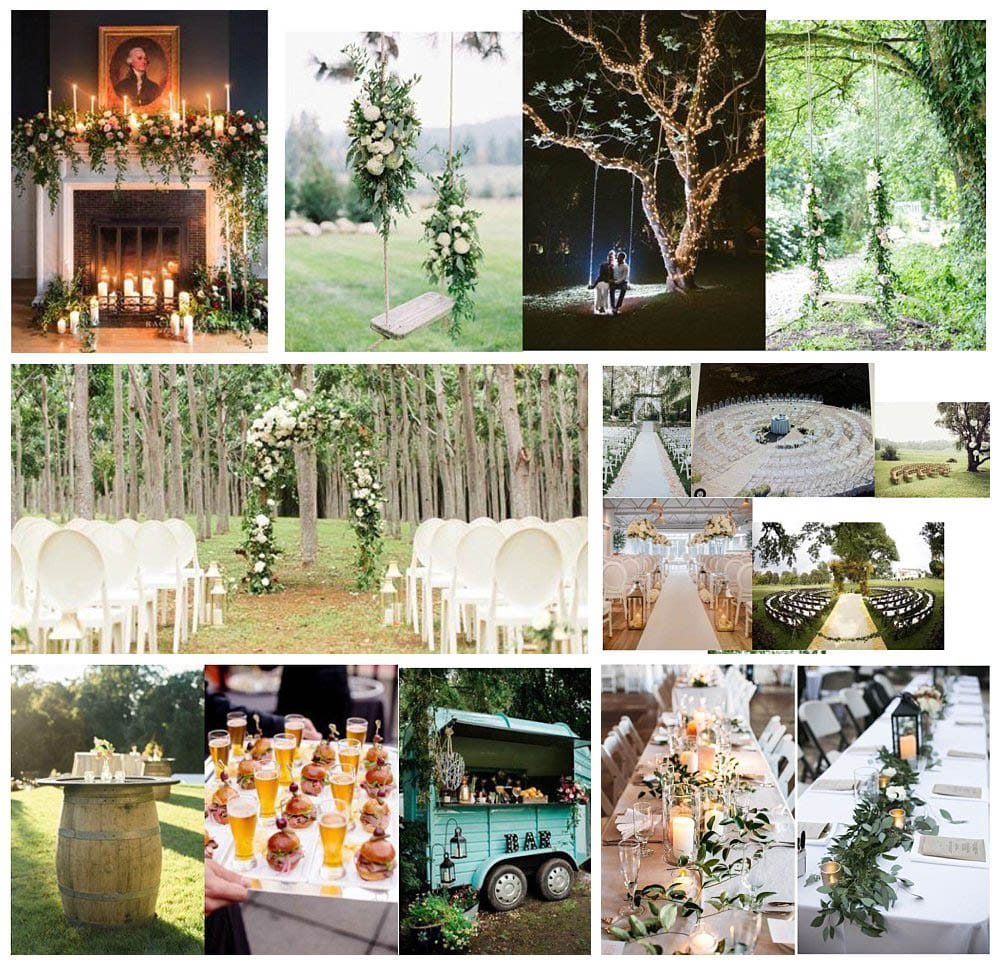
One of my favourite examples of the value of a mood board comes from a styled wedding photoshoot I photographed for Ballykealey House.
The hotel’s marketing manager put considerable effort into preparing the shoot, including creating a fabulous mood board to communicate the creative vision.
One particular image from that mood board has stayed with me.
It showed an outdoor wedding ceremony with the chairs arranged in a circle around the bride and groom.
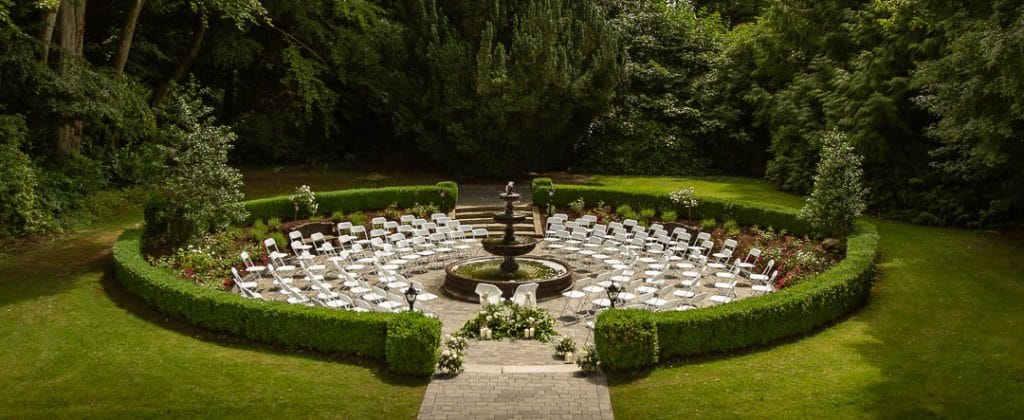
Rather than attempting to copy that photograph, we used it as inspiration.
Ballykealey House has a beautiful outdoor fountain, and we decided to create our own interpretation of that circular ceremony arrangement around it.
With careful preparation, styling, and collaboration between everyone involved, we created a beautiful outdoor wedding ceremony photograph.
That image is still being used on Ballykealey House’s wedding page.
For me, it’s a perfect example of why spending time on the creative process before a shoot is invaluable.
The mood board gave us a starting point. The location and the people involved helped us turn that inspiration into something unique to the hotel.
And the result was a photograph with lasting marketing value.
You can read more about the project in my Ballykealey House photography case study.
6. Does Too Much Planning Kill Creativity?
I sometimes hear the argument that detailed planning might limit spontaneity.
My experience is the opposite.
A shot list is a map. It’s not a rigid set of instructions.
On virtually every photoshoot, something changes.
The weather might force us to rethink an outdoor photograph. A client might have a new priority. Or we might discover a much better photographic opportunity than the one originally planned.
That’s all part of the creative process.
On a recent styled photoshoot for Johnstown Estate, ideas came from everywhere.
Models, hotel management, staff, and the marketing team all contributed suggestions as the shoot progressed.
It was a genuinely collaborative process.
The shot list helped us assess those ideas.
Had we already covered something similar? Could we adapt a planned photograph? Was this new idea more valuable than something else on the list?
And, critically, were we still on track to deliver the photographs the client actually needed?
Without a shot list, it’s surprisingly easy to get carried away creating beautiful images only to discover that an essential photograph has been overlooked.
Planning gives us the freedom to be creative without losing sight of the bigger picture.
7. Good Preparation Means More Photographs for Your Investment
A professional hotel photoshoot represents a significant investment.
You’re paying for professional photography, but you’re also investing the time of your marketing team, management, and other staff.
You may be paying for models, flowers, styling, and additional suppliers.
It makes sense to maximise the return on that investment.
From my experience, a well-prepared photoshoot can reasonably produce two to three times as many photographs as a poorly organised one, depending on the nature of the shoot.
Think about that for a moment.
By investing time in preparation, you could significantly increase the number of usable marketing images produced from the same photography budget.
And we’re not talking about simply taking more photographs.
We’re talking about creating more of the right photographs.
Images with a clear purpose, designed for your website, advertising, social media, brochures, and other marketing channels.
Beautiful photographs that can continue working for your business for years.
The Ballykealey House wedding ceremony photograph is a great example. That one carefully planned image continues to help communicate the hotel’s wedding offering long after the photoshoot itself.
For me, that’s the real return on good preparation.
8. Can AI Create Your Shot List for You?
AI can certainly produce a list of suggested photographs for a hotel photoshoot.
But I don’t recommend relying on it to do your thinking for you.
Here’s why.
The real value of creating a shot list is the thinking you do while creating it.
When you sit down with your sales manager, you discover which questions customers are asking.
When you speak to your website developer, you uncover gaps in your existing photography.
When you discuss your brand with your marketing team, you clarify what makes your business special.
And when you work through the practical details with your heads of department, you begin preparing everyone for the shoot.
An AI-generated list can’t replace those conversations.
By all means, use AI to help organise your ideas, but don’t let it become a shortcut around the most valuable part of the process.
The goal isn’t simply to produce a completed spreadsheet.
The goal is to get everyone thinking about what the photographs need to achieve and how you’re going to create them.
9. What If You’re Too Busy to Create a Shot List?
My advice is simple.
If you’re too busy to prepare properly for a photoshoot, you’re probably too busy to do the photoshoot.
I’d genuinely recommend rescheduling until you have time to invest in the preparation.
That might sound like an unusual thing for a photographer to say.
But I’d much rather work with a client who’s properly prepared than arrive at a hotel where nobody has time to support the shoot.
The difference in the final results can be enormous.
And remember, the photographs we’re creating aren’t just for today.
The right images could be promoting your business on your website, in brochures, and across your marketing channels for years to come.
Surely that’s worth investing a little time in getting right?
Final Thoughts: The Best Photoshoots Begin Long Before the Camera Comes Out
If there’s one thing I’ve learned from years of hospitality photography, it’s that great results rarely happen by accident.
They happen when people take the time to think, plan, communicate, and collaborate.
A good shot list makes the photoshoot more efficient.
A good mood board helps everyone share the same creative vision.
And together, they give us the best possible chance of creating photographs that are not only beautiful but genuinely useful to your business.
Remember: 80% of the work is done before the shoot.
The photography is where all that preparation comes together.
Planning a Hotel Photoshoot?
If you’re thinking about commissioning photography for your hotel or hospitality business, I’d be delighted to help.
I guide clients through the planning process, provide a sample shot list, and help turn their marketing goals into a clear, achievable photography plan.
Because the best photographs start with a great plan.